
Standardizing service processes is one of the biggest operational challenges in any multi location organization. When each branch develops its own way of handling appointments, walk-ins, documentation, or reporting, inconsistency becomes unavoidable.
Customers receive different experiences, staff follow different steps, and leadership struggles to measure performance accurately.
A clearly defined service process creates structure. It ensures that every location follows the same sequence of actions, uses the same terminology, and reports on the same metrics. In a multi location environment, this consistency reduces errors, improves compliance, and makes training easier.
In this guide, we will explain how organizations can document, align, and standardize service processes across all locations without slowing down day-to-day operations.
Why Standardizing Service Processes Matters
Standardizing service processes ensures that every branch in a multi location organization operates with the same structure, expectations, and service standards. It reduces variation and creates measurable consistency across locations.
-
Consistent Customer Experience Across Locations
Customers expect the same quality of service regardless of which multi location branch they visit. When the service process is standardized, wait times, communication style, and resolution steps follow a predictable pattern.
Brand credibility depends on consistency. If one location performs efficiently while another feels disorganized, customer trust declines. A unified service process protects brand reputation by delivering the same experience everywhere.
-
Operational Efficiency and Cost Control
Standardized service processes reduce duplication of tasks across teams and locations. When every multi location branch follows the same service process, there is less confusion, fewer repeated steps, and clearer accountability.
Training also becomes simpler and more cost-effective. New employees can be onboarded using one defined framework instead of learning different procedures at each location.
-
Better Compliance and Risk Management
A standardized service process ensures that policies, documentation steps, and escalation procedures are followed consistently across all multi location operations. This reduces the likelihood of regulatory violations.
Clear guidelines also minimize service errors and legal exposure. When employees follow the same approved service processes, organizations lower the risk of disputes, audit failures, and compliance gaps.
Also read - 4 Reasons Your Customer Service Strategy Isn’t Working
How to Standardize Service Processes in Multi-Location Organizations
Standardizing service processes requires deliberate structure, documentation, and oversight. Multi location organizations must define one clear service process and apply it consistently across every branch.
1. Define and Document Core Service Workflows
Every multi location organization should begin by clearly defining how a service process is supposed to work from start to finish. This removes assumptions, reduces informal workarounds, and ensures each location operates under the same structure instead of relying on local habits.
To implement this effectively:
Map the full customer journey from entry or check-in to service completion and follow-up. Clearly identify handoffs, approvals, and decision points that affect service flow.
Develop written standard operating procedures for check-in, service delivery, escalations, and post-service communication so that staff follow the same steps in every location.
Define what information must be collected during each service process, how it should be recorded, and where it must be stored to maintain consistency.
Establish mandatory baseline steps that every branch must follow, even if limited local adjustments are permitted for operational needs.
This ensures that service processes remain consistent across every multi location site, reducing variation, confusion, and compliance risk.
2. Implement a Centralized Queue Management System
A centralized queue management system helps standardize how a service process begins and moves forward in every multi location branch. When each site uses the same queue management software, customer flow becomes predictable, measurable, and consistent across the organization.
To implement this effectively:
Deploy one queue management system across all locations for appointments, walk-ins, and digital check-ins so every branch follows the same intake process.
Standardize ticket generation, queue logic, and routing rules to ensure customers are served in a consistent and fair order regardless of location.
Align appointment handling and walk-in management within a single platform to remove variations in how different branches manage demand.
Use a solution such as Qminder to apply uniform service logic, track wait times consistently, and maintain visibility across all multi location operations.
This approach ensures that the service process starts the same way everywhere, reducing operational differences and improving control.
3. Use Real-Time Dashboards for Cross-Location Visibility
Standardizing service processes in a multi location organization requires more than written procedures. Leadership must be able to see how each service process performs in real time across all branches. Real-time dashboards create a shared, data-driven view of operations, making performance measurable, comparable, and accountable.
To implement this effectively:
Monitor wait times, service duration, and staff activity from one centralized dashboard so performance is measured consistently across locations.
Compare branches using uniform metrics to quickly identify underperforming sites or gaps in the service process.
Provide head office teams with structured oversight that supports decision-making without interfering in daily frontline operations.
Set alerts for service delays or unusual spikes in demand to enable early intervention before service levels decline.
This approach strengthens governance while preserving operational flexibility at each location.
Helpful read - Dashboard Features You Didn’t Know Could Transform Multi-Department Workflows
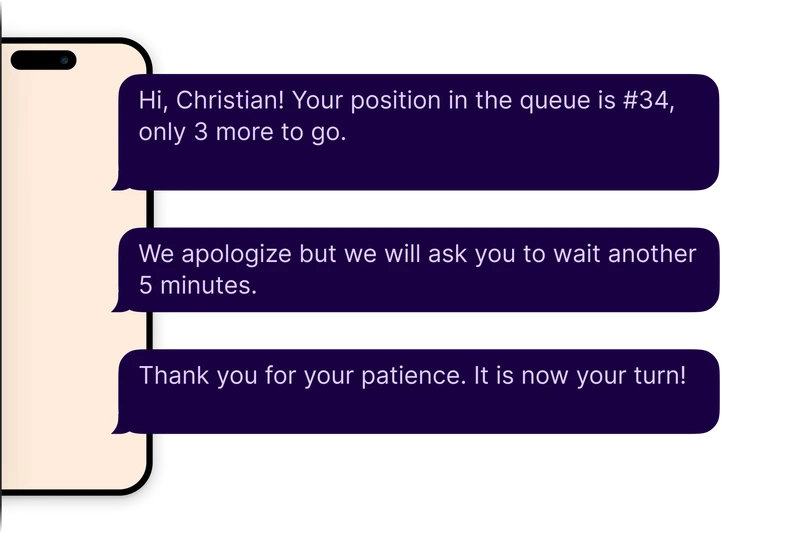
4. Standardize Communication with Automated Messaging
Standardizing a service process in a multi location organization also requires consistent communication. Customers should receive the same updates, reminders, and instructions regardless of which branch they visit. Automated messaging ensures that communication remains timely, accurate, and uniform across all locations.
To implement this effectively:
Configure automated SMS or email notifications for appointment confirmations, queue updates, and service reminders so messaging is consistent across every branch.
Use standardized message templates with approved wording to ensure tone, instructions, and policy details remain aligned with brand guidelines.
Schedule reminder messages before appointments to reduce no-shows and ensure customers arrive prepared with required documents or information.
Automate follow-up messages after service completion to maintain continuity in the service process and reinforce accountability.
This approach reduces confusion, improves attendance, and ensures that communication does not vary from one location to another.
5. Train Staff Using a Unified Onboarding Framework
Standardizing service processes in a multi location organization requires consistent staff training. Every employee should understand the same service process, follow the same procedures, and meet the same quality standards, regardless of location. A unified onboarding framework ensures alignment from day one and reduces variation in service delivery.
To implement this effectively:
Develop standardized training manuals and digital learning modules that clearly document each step of the service process.
Use practical scenarios and role-based training to show how procedures apply in real frontline situations.
Conduct scheduled refresher sessions to reinforce expectations and address recurring service gaps.
Define measurable service quality benchmarks and evaluate staff performance against the same criteria across all locations.
This approach creates consistency in execution and strengthens accountability across the organization.
6. Use Data to Benchmark and Improve Performance
Standardizing service processes in a multi location organization requires continuous measurement. Data allows leadership to compare how each service process performs across branches and identify where improvements are needed. Without benchmarking, inconsistencies remain hidden.
To implement this effectively:
Compare key metrics such as wait times, service duration, volume handled, and customer feedback across all locations using the same definitions and reporting standards.
Analyze performance trends to identify recurring bottlenecks, delays, or breakdowns in the service process.
Document and replicate best practices from high-performing locations to strengthen weaker branches.
Review performance regularly and adjust procedures, staffing models, or communication steps based on measurable evidence.
This structured use of data turns standardization into an ongoing improvement process rather than a one-time initiative.
You might also like - The ROI of Queue Analytics for Enterprises
7. Create Feedback Loops Across All Locations
Standardizing service processes in a multi location organization should not eliminate learning. Feedback loops allow organizations to evaluate how each service process performs in real conditions and adjust when necessary. Consistent feedback collection ensures that improvements are based on evidence rather than assumptions.
To implement this effectively:
Collect customer satisfaction data at the same points in the service process across all locations to maintain comparability.
Use structured surveys or rating systems to measure consistency in wait times, clarity of communication, and service quality.
Review feedback trends regularly to identify recurring issues in standardized workflows.
Involve frontline teams in reviewing feedback and proposing practical adjustments to improve the service process.
This approach ensures that standardization evolves over time and supports continuous improvement across the entire multi location network.
Turn Standardization Into a Competitive Advantage
Standardizing service processes across a multi location organization reduces inconsistency, lowers risk, and improves operational control. Clear workflows, centralized systems, real-time visibility, structured communication, and unified training create a predictable and measurable service process.
Data benchmarking and feedback loops ensure that improvements continue over time rather than stopping at documentation. Organizations that treat service processes as strategic assets gain stronger performance alignment across every branch.
A centralized queue management system such as Qminder helps enforce consistent intake, flow, and reporting across all locations.
Book a demo with Qminder to standardize your service processes and strengthen multi location operations.
The timeline depends on the size of the organization and the complexity of existing service processes. Smaller multi location operations may complete alignment in a few months, while larger enterprises may require phased implementation across regions. A structured rollout plan with pilot testing reduces disruption.
Limited flexibility can be allowed for regional regulations or operational constraints. However, the core service process structure, data definitions, and reporting standards should remain consistent to protect comparability and governance.
Success can be measured through improved consistency in performance metrics, reduced service variation between locations, lower error rates, and stronger alignment with internal compliance standards. Regular audits and cross-location performance reviews help validate progress.
Get to know our solutions
We will give you a short but great overview of how Qminder can improve your business and visitors experience.
Try out Qminder for yourself and see how we can improve your business and visitors experience.