

Keeping customers is often harder than acquiring them. Many businesses invest heavily in marketing but overlook the systems that support long-term relationships. Effective customer retention strategies focus on consistency, trust, and measurable value over time.
Strong client retention strategies reduce churn, increase lifetime value, and create predictable revenue streams. Retention of customers does not happen by accident; it requires structured customer retention management strategies that align service quality, communication, and follow-up processes.
In this guide, we examine practical customer retention strategies that organizations can apply immediately to strengthen loyalty and protect recurring revenue.
7 Best Customer Retention Strategies That Really Work
The following customer retention strategies focus on operational discipline, communication clarity, and long-term relationship building. Each approach supports measurable retention of customers and strengthens client retention strategies across industries.
1. Deliver a Consistent and Predictable Service Experience
Consistency is a core customer retention management strategy. Customers want to feel confident that each interaction will meet the same standard. When service quality changes from one visit to the next, customers question reliability. That uncertainty reduces retention of customers and increases the risk of churn.
To apply this customer retention strategy effectively, you must control variation in how service is delivered:
Map the full customer journey from first contact to final follow-up and define the exact steps required at each stage.
Create written procedures for check-in, service delivery, issue resolution, and post-service communication.
Set measurable service benchmarks such as response time targets and resolution timelines.
Train all staff using the same documented standards to ensure uniform execution.
Monitor performance data and customer feedback regularly to identify gaps and correct them quickly.
The benefit of this approach is measurable and long lasting. Consistency reduces complaints, shortens recovery time when issues occur, and increases repeat engagement. Among all customer retention strategies, predictable service delivery remains one of the most dependable ways to strengthen client retention strategies and improve retention of customers.
2. Use Data to Personalize Every Interaction
Personalization is one of the most effective customer retention strategies because it makes customers feel understood. Generic service feels transactional. Personalized service strengthens client retention strategies by showing that the business pays attention to individual needs. Strong customer retention management strategies rely on structured data, not guesswork.
To apply this strategy effectively:
Track customer preferences, service history, purchase patterns, and past interactions in a centralized system.
Use this data to adjust recommendations based on previous behavior instead of offering the same options to everyone.
Send follow-up messages that reference the customer’s last visit, service outcome, or stated preferences.
Segment customers based on behavior, frequency, or value to tailor communication and offers appropriately.
Review customer data regularly to keep records accurate and up to date.
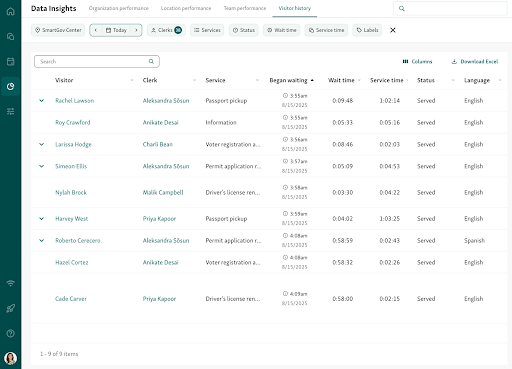
When customers receive relevant communication and tailored service, they feel valued. This strengthens retention of customers, increases repeat engagement, and makes customer retention strategies more sustainable over time.
Related read - Top 6 Data Insights You Can Gain from Appointment Scheduling Software
3. Reduce Wait Times with Smart Queue Management
Long wait times weaken trust and directly harm retention of customers. When customers spend too much time waiting, frustration replaces satisfaction. Effective customer retention strategies must control wait time because delays are one of the most common reasons customers switch providers. Client retention strategies work best when service feels efficient and respectful of time.
To apply this customer retention management strategy:
Implement a smart queue management system that tracks live wait times and service flow.
Use real-time queue visibility dashboards to monitor congestion and adjust staffing quickly.
Separate appointments from walk-ins to reduce bottlenecks.
Send automated SMS updates so customers know their position and expected wait time.
Review wait time data weekly to identify recurring peak periods.
Platforms like Qminder help businesses manage queues with real-time visibility and automated notifications.
Smoother visits reduce frustration, improve perceived service quality, and increase return rates. Among practical customer retention strategies, reducing wait times delivers immediate and measurable impact on retention of customers.
Improve Retention with Qminder
4. Make Check-In Fast and Convenient
The check-in stage strongly influences first impressions. Slow or confusing entry processes weaken customer retention strategies because customers associate delays with poor organization. Efficient entry procedures support client retention strategies by reducing friction and improving perceived control.
To apply this customer retention management strategy:
Introduce self-service kiosks so customers can check in quickly without waiting for staff assistance.
Offer mobile or web-based sign-in options so customers can register before arrival.
Enable remote check-in to reduce lobby congestion and improve space management.
Provide clear on-screen instructions to prevent confusion during the check-in process.
Monitor average check-in time to ensure the process remains efficient.
When customers enter smoothly and without frustration, their overall experience improves. Faster and more convenient check-in strengthens retention of customers by making visits feel organized and respectful of time.
5. Actively Collect and Respond to Customer Feedback
Feedback is a direct input into customer retention strategies. If businesses do not ask customers about their experience, they miss early warning signs of dissatisfaction. Strong client retention strategies require structured listening and visible action. Retention of customers improves when customers see that their input leads to change.
To apply this customer retention management strategy:
Send short post-visit surveys through SMS or email within 24 hours of service.
Track satisfaction scores, common complaints, and repeat issues using service analytics tools.
Categorize feedback into clear themes such as wait time, staff behavior, or service quality.
Assign responsibility to review feedback weekly and define corrective actions.
Follow up with customers when appropriate to acknowledge their concerns and explain improvements.
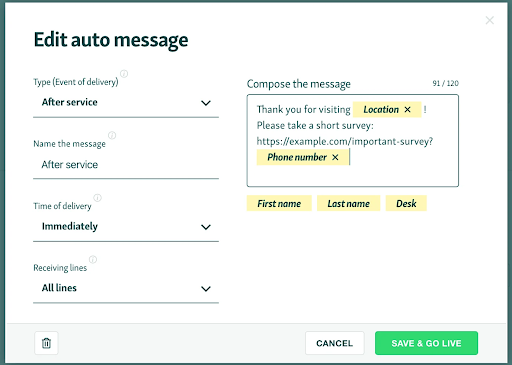
When organizations close the loop and act on insights, customers feel heard. This strengthens trust and supports long-term customer retention strategies based on improvement rather than assumption.
6. Train Staff to Build Relationships, Not Just Complete Transactions
Many customer retention strategies fail because they focus only on processes and ignore human interaction. Retention of customers depends heavily on how customers feel during each visit. Strong client retention strategies require staff to go beyond task completion and build trust through respectful communication.
To apply this customer retention management strategy:
Train staff in empathy and active listening so they fully understand customer concerns before responding.
Establish clear greeting standards to ensure every customer feels acknowledged upon arrival.
Encourage staff to use the customer’s name when appropriate and maintain professional eye contact.
Teach employees to explain next steps clearly to reduce confusion or anxiety.
Recognize and reward staff who consistently deliver positive service interactions.
When routine visits feel personal and respectful, customers form emotional loyalty. Emotional loyalty strengthens customer retention strategies and increases the likelihood of repeat business.
7. Reward Loyalty and Encourage Repeat Engagement
Effective customer retention strategies recognize and reward repeat behavior. Retention of customers increases when businesses acknowledge loyalty in visible and structured ways. Strong client retention strategies go beyond one-time discounts and focus on long-term engagement incentives.
To apply this customer retention management strategy:
Create a loyalty program that offers points, benefits, or service upgrades based on frequency or spend.
Provide priority access or faster service lanes for returning customers where appropriate.
Offer exclusive promotions, early access, or members-only communication.
Track repeat visit frequency to identify high-value customers and tailor benefits accordingly.
Communicate loyalty benefits clearly so customers understand the value of returning.
When customers feel recognized and appreciated, they are more likely to continue choosing the same provider. Structured rewards strengthen customer retention strategies by reinforcing long-term engagement instead of short-term transactions.
You might also like - 4 Levels of Customer Loyalty: How to Keep Your Clients
Common Mistakes That Hurt Customer Retention
Even well-designed customer retention strategies can fail if basic service mistakes go unchecked. These common errors weaken client retention strategies and reduce long-term retention of customers.
Ignoring small service breakdowns
Minor issues such as delayed responses or unclear instructions may seem harmless, but repeated small failures reduce trust. When businesses do not correct these early signs, they weaken customer retention management strategies over time.
Overcomplicating processes
Complex check-in steps, confusing policies, or unclear procedures frustrate customers. Simple and structured processes support retention of customers, while unnecessary complexity increases churn risk.
Failing to communicate delays
Customers tolerate delays more easily when they receive honest and timely updates. Silence creates uncertainty. Clear communication strengthens customer retention strategies by protecting trust during disruptions.
Treating complaints as isolated incidents
Viewing complaints as one-time problems prevents systemic improvement. Strong client retention strategies analyze recurring patterns and fix root causes instead of addressing only individual cases.
Read more - 5 Customer Experience Mistakes to Avoid
Turn Customer Retention Strategies into Daily Operational Discipline
Strong customer retention strategies require consistency, personalization, speed, and structured follow-up. Businesses that focus only on acquisition often overlook the systems that protect retention of customers.
Effective client retention strategies reduce friction, shorten wait times, train staff to build trust, and reward loyalty in measurable ways. Customer retention management strategies must operate daily through clear standards, data tracking, and continuous improvement.
Tools like Qminder support smoother visits, lower wait times, and better service visibility.
If you want to strengthen retention of customers through operational control, explore how Qminder can help you start today.
Measure customer retention strategies using retention rate, repeat purchase rate, churn rate, and customer lifetime value. Compare these metrics over consistent time periods to evaluate whether client retention strategies are improving long-term retention of customers.
Organizations should review customer retention management strategies quarterly. Regular reviews allow teams to adjust processes, update engagement tactics, and respond to changes in customer behavior before retention declines.
Yes. Small businesses can apply customer retention strategies by standardizing service steps, tracking basic customer data, and maintaining consistent communication. Retention of customers depends more on discipline and follow-through than on company size.
Get to know our solutions
We will give you a short but great overview of how Qminder can improve your business and visitors experience.
Try out Qminder for yourself and see how we can improve your business and visitors experience.