
Large organizations rely heavily on frontline systems to manage customer interactions, employee workflows, and real-time service delivery. These frontline systems often include check-in tools, ticketing platforms, scheduling software, CRM integrations, and internal dashboards.
When these systems operate in isolation, gaps begin to form. Data does not flow cleanly. Teams work with incomplete information. Accountability becomes harder to track.
Fragmented frontline systems create operational blind spots that increase risk across compliance, customer experience, and internal coordination. Delays, duplicated work, security exposure, and inconsistent service standards are common outcomes.
This blog explains how disconnected frontline systems increase enterprise risk and what large organizations should evaluate to reduce that exposure.
What Causes System Fragmentation in Large Organizations?
System fragmentation in large organizations usually develops over time as new tools are added without a unified strategy. When frontline systems are selected department by department, gaps and inconsistencies emerge.
-
Siloed Departments and Disconnected Tools
Fragmentation often starts when different teams adopt separate frontline systems for appointments, walk-ins, CRM, reporting, or internal workflows. Each system solves a local problem but does not connect to others.
Without proper integration between frontline systems, data remains isolated. Teams operate with partial visibility, and leadership cannot see a complete, real-time view of operations across the organization.
-
Legacy Infrastructure and Manual Processes
Many organizations still rely on paper sign-ins, spreadsheets, and manual data entry within their frontline systems. These methods increase errors, delay reporting, and make it difficult to track performance accurately.
Older frontline systems often do not integrate with modern platforms. As a result, information must be transferred manually or re-entered, which increases operational risk and reduces reliability.
-
Rapid Expansion Without Standardization
When organizations expand quickly across regions or locations, frontline systems are often implemented independently at each site. This creates variation in tools, workflows, and service standards.
Over time, each branch may adopt its own processes. Without standardized frontline systems, consistency declines and performance becomes difficult to compare across locations.
-
Lack of Centralized Visibility and Governance
Fragmented frontline systems prevent organizations from maintaining a single dashboard for real-time oversight. Leaders cannot monitor service levels, risk exposure, or operational bottlenecks in one place.
Inconsistent reporting standards across departments further reduce clarity. When frontline systems measure performance differently, decision-making becomes slower and less reliable.
You might also like - 5 Reasons Why Your Customers Leave Your Business
The Risks of Fragmented Frontline Systems
Fragmented frontline systems introduce operational, security, and compliance risks that grow as organizations scale. Here are some of the risks:
1. Increased Compliance and Security Vulnerabilities
When frontline systems are disconnected, data handling practices vary between departments or locations. Some teams may follow strict protocols, while others rely on informal or outdated processes.
This inconsistency increases the risk of privacy breaches, incomplete records, and failed audits. Sensitive customer information may be stored in multiple tools without unified access controls or monitoring.
Example: A branch stores customer intake details in a shared spreadsheet, while another uses a secure platform with restricted access. During an audit, the organization cannot prove consistent data protection standards, exposing it to regulatory penalties.
2. Poor Customer and Citizen Experience
Fragmented frontline systems create inconsistent and frustrating service experiences. When tools do not connect, customers feel the gaps between departments.
Long wait times increase when staff cannot see real-time demand across locations or service points. Repeated data collection happens when systems do not share records, forcing customers to provide the same information multiple times. Service journeys become confusing when there is no unified view of appointments, walk-ins, and follow-ups.
Example: A customer books an appointment online, but the in-store team cannot access the booking details. The customer has to repeat their information and wait again, even though they already scheduled in advance
3. Operational Inefficiencies and Bottlenecks
Fragmented frontline systems increase internal friction and slow service execution. When systems do not communicate, teams spend time fixing gaps instead of serving customers.
Duplicate work happens when multiple teams enter or verify the same data in different systems. Manual coordination between departments delays approvals, updates, and task assignments, which slows overall service delivery.
Example: A front desk team logs a walk-in customer in one system, while the back-office team re-enters the same details into another tool for processing. This repetition wastes time and increases the risk of errors.
4. Inaccurate or Delayed Decision-Making
Frontline systems that operate in isolation limit visibility at the leadership level. Without integrated data, decision-making becomes reactive rather than strategic.
A lack of reliable real-time data makes it difficult to measure service load, wait times, or staff performance accurately. Leaders may rely on outdated reports or partial data sets, which can lead to incorrect staffing or investment decisions.
Example: Headquarters reviews weekly reports that do not reflect real-time queue buildup at certain branches. As a result, staffing adjustments are made too late, and service levels continue to decline.
5. Staff Burnout and Frontline Frustration
Disconnected frontline systems increase workload for employees. Staff members must switch between multiple platforms to complete a single service interaction.
This constant system juggling increases administrative burden and reduces time spent serving customers. Over time, repetitive manual tasks and unclear processes contribute to frustration and burnout.
Example: A service agent checks one tool for appointments, another for queue status, and a third for customer history. The extra steps slow down each interaction and increase stress during peak hours.
6. Reputational and Public Trust Risks
Fragmented frontline systems increase the likelihood of visible service failures. Delays, lost records, and inconsistent communication quickly turn into public complaints.
When issues repeat across locations, negative reviews accumulate and attract media attention. Public-facing organizations risk long-term damage to credibility.
Example: A customer arrives for a confirmed appointment, but the local system does not reflect the booking made online. The incident is shared on social media, drawing criticism about the organization’s reliability.
7. Limited Scalability During Peak Demand
Disconnected frontline systems struggle during high-traffic periods. Without coordinated controls, service counters become overloaded while other areas remain underutilized.
The absence of structured queue control leads to confusion and unmanaged waiting during surge periods.
Example: During a seasonal rush, multiple branches experience long lines because appointment data and walk-in volumes are not synchronized. Staff cannot rebalance resources in real time, causing service breakdowns.
How to Fix Fragmented Frontline Systems
Large organizations reduce operational risk when frontline systems are standardized and centrally managed. The goal is to replace disconnected tools with coordinated platforms that support visibility, control, and consistency.
1. Centralize Data and Oversight Across Locations
This step focuses on executive control and governance across frontline systems. Large organizations need a single source of truth that consolidates operational data from all branches into one structured view. Without centralized oversight, reporting becomes inconsistent and risk increases. Centralization also allows leadership to monitor performance trends, compliance status, and operational stability in real time.
Unify reporting into one executive dashboard
Combine appointment data, walk-ins, wait times, service duration, and volume into a centralized reporting layer visible to leadership.
Standardize data definitions and KPIs
Ensure every location measures metrics such as wait time and service completion using the same definitions to eliminate confusion.
Define access controls and data ownership
Establish clear permission levels to protect sensitive information and reduce compliance exposure.
Enable cross-location performance comparison
Allow leadership to compare branch performance using consistent, real-time data to identify inefficiencies quickly.
2. Implement a Modern Queue Management System
Organizations should replace fragmented and manual processes with structured, digital queue management software. A modern queue management system standardizes how visitors check in, wait, and move through service points. This reduces operational risk, improves visibility, and creates consistent service delivery across locations.
Replace manual sign-ins with digital check-in
Use kiosks, mobile, or web-based check-in to eliminate paper logs and reduce data entry errors.
Standardize service flow across departments
Configure clear routing rules so customers move through the same structured process in every branch.
Improve compliance and record accuracy
Automatically log timestamps, service duration, and visit history to support audits and reporting.
Tools like Qminder help large organizations modernize frontline systems by digitizing queues while maintaining centralized oversight and control.
Helpful read - What is Queue Management System? A Definitive Guide
3. Use Real-Time Dashboards for Visibility and Control
Real-time dashboards provide centralized oversight of frontline systems across all locations. They replace delayed reporting with live operational data, allowing managers to detect emerging issues, compare branch performance, and maintain consistent service standards without waiting for end-of-day summaries.
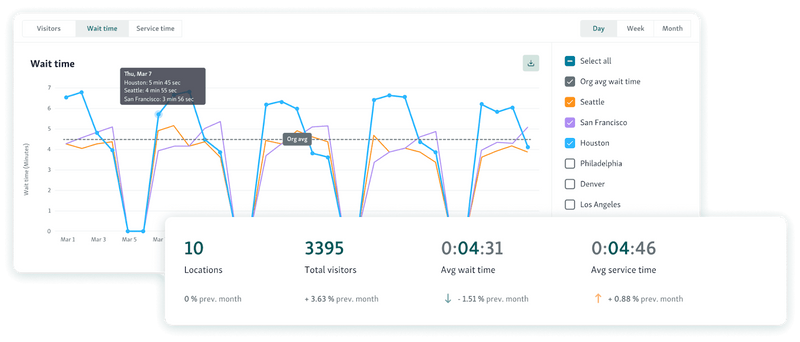
Monitor wait times and service levels in real time
Track queue length, average service duration, and visitor volume across locations from a single interface.
Measure staff performance consistently
View service throughput, handling time, and workload distribution to identify imbalance or underutilization.
Enable proactive intervention
Reallocate staff, open additional counters, or adjust routing rules before bottlenecks escalate into service failures.
4. Automate Communication with Visitors
Automating communication within frontline systems ensures visitors receive consistent, timely updates without relying on manual staff intervention. It reduces confusion, limits repetitive questions at service counters, and creates a more structured service environment.
Inform visitors about their queue status, estimated wait time, or required next steps without requiring them to stay at the counter.
Provide digital status updates
Use screens or mobile updates to show live queue progress and service announcements in real time.
Standardize communication across locations
Ensure every branch follows the same notification process, reducing inconsistency and improving transparency.
5. Deploy Service Analytics for Continuous Improvement
Frontline systems should not only manage daily operations but also generate data that supports long-term improvement. Service analytics help organizations understand patterns, identify weak points, and make structured adjustments instead of reacting to complaints.
Track visit duration and peak demand patterns
Monitor how long services take, when traffic spikes occur, and where delays frequently happen.
Analyze customer feedback alongside operational data
Connect service times with satisfaction scores to identify locations where experience and performance diverge.
Use data to allocate staff and resources effectively
Adjust staffing levels, shift schedules, and counter availability based on measurable demand rather than assumptions.
Enable enterprise-wide reporting and standardization
Solutions like Qminder provide centralized reporting across locations, ensuring consistent KPIs, comparable metrics, and aligned performance standards throughout the organization.
Eliminate Fragmentation Before It Becomes a Risk
Fragmented frontline systems create operational blind spots, compliance exposure, inconsistent service delivery, and unnecessary strain on staff. When appointments, walk-ins, reporting, and communication tools operate in isolation, large organizations lose control over visibility and governance. The result is slower service, higher risk, and declining public trust.
Standardization, centralized oversight, real-time visibility, and structured queue management are practical steps to reduce this risk. Enterprise-ready platforms such as Qminder help unify frontline operations, reporting, and service flow across locations.
Start your free trial with Qminder today.
Organizations can conduct a systems audit to identify how many tools are used across locations, whether data is duplicated, and where manual workarounds exist. If teams rely on email threads, spreadsheets, or disconnected dashboards to complete one service request, fragmentation is likely present.
Governance should involve operations leaders, IT, compliance teams, and frontline managers. Clear ownership ensures system standards, data policies, and reporting structures remain consistent as the organization grows.
Frequent service delays, inconsistent reports across branches, unresolved audit findings, and repeated customer complaints about process confusion often indicate structural system gaps that require immediate correction.
Get to know our solutions
We will give you a short but great overview of how Qminder can improve your business and visitors experience.
Try out Qminder for yourself and see how we can improve your business and visitors experience.